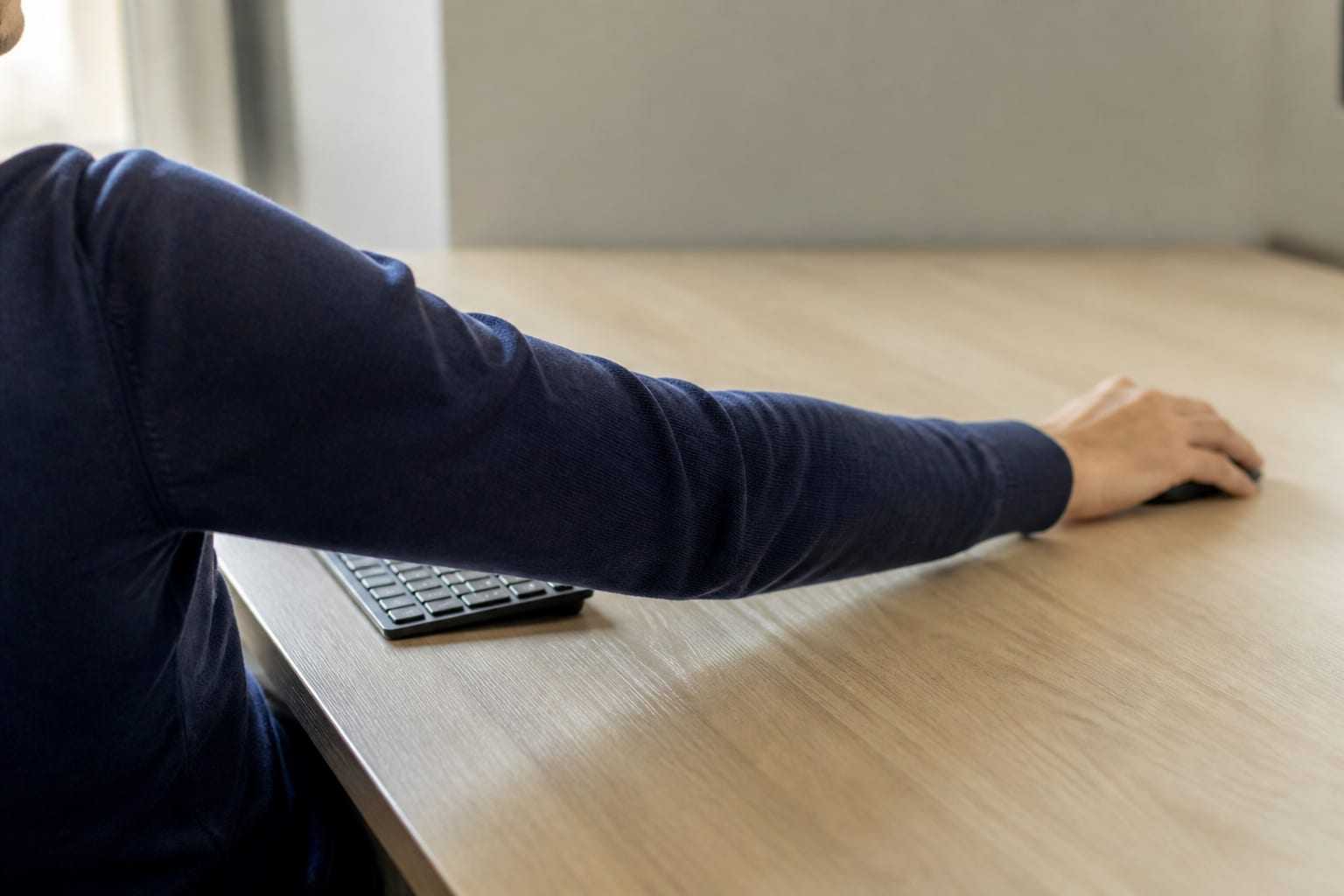
Shoulder Pain in Office Workers: Loading, Reach and Variety of Movement
In desk workers, shoulder symptoms are often linked to sustained low-level loading. We explain the role of mouse reach, armrests and movement variety.
The shoulder, arm, wrist and hand sit at the centre of repetitive movement through the day. This page explains how complaints in this region are approached.

The shoulder is not a single joint; it is a girdle made of several joints working together and of the movement of the shoulder blade on the ribcage. This structure allows the widest range of movement in the human body; in return, it leaves balance largely to the muscles and to movement control.
That is why looking only at the painful point is not enough in shoulder complaints. Movement of the shoulder blade, the posture of the trunk, the contribution of the neck, and how often the arm goes overhead during the day are assessed together. A complaint felt in the arm may sometimes relate to the neck, and sometimes to the daily loading pattern; making that distinction needs a detailed assessment.
In the shoulder region, too, imaging findings are not a guide on their own. Some changes seen in tendon and joint structures with age also appear in people who have no symptoms. What matters is how comfortably the person can use the arm, in which movements, and how far.
In desk work the arm stays for a long time in front of the trunk and in a relatively fixed position. The placement of the keyboard and mouse, desk height, whether there is arm support, and the habit of working on a laptop all affect the static load on the shoulder girdle directly.
Static load is a load that is hard to notice because it does not require a large force; as it lasts longer, though, it affects musculoskeletal comfort. Changing the position of the arm during the day, working with support, and moving in short breaks change how this load is distributed.
In activities that involve repetitive movement — gardening, carrying, sport or music — a sudden increase in load is what matters. The same movement is usually well tolerated if it has been done for a long time; when it is increased quickly and without preparation, a complaint often appears.
Complaints in the wrist and hand often come up in relation to keyboard and mouse use, time spent with mobile devices, and repetitive work done with the hands. Keeping the wrist outside a neutral range for a long time, and repetitive movements that require gripping, increase the load on the region.
The approach does not change here either: the placement of equipment, how often the movement is repeated, and break organisation are taken together. When there is numbness in the hand, loss of strength, or a complaint that increases at night, the process needs to run together with a physician assessment.
Assessment looks at which movements increase the complaint, in which positions and for how long the arm stays during the day, movement control of the shoulder girdle, and general muscle capacity. The contribution of the neck and mid-back is treated as part of the same whole.
Two themes stand out in planning. The first is an exercise routine that gradually raises the shoulder girdle’s tolerance of load. The second is rearranging daily and occupational loading: adjusting the workstation, using a riser and a separate keyboard when working on a laptop, and organising breaks in repetitive work.
Progress is followed against concrete goals: being able to lift the arm overhead comfortably, being able to work through the day without having to stop because of pain, being able to return to a sport that is enjoyed. The programme is updated according to these goals.
Progress in the shoulder region is often gradual and takes time. Setting a realistic expectation from the start is more useful than changing direction halfway through. When it is discussed in advance when load will be increased, when a movement will be added, and what will count as a temporary fluctuation, the person can follow their own progress more comfortably.
Movement of the shoulder girdle, control of the shoulder blade, the contribution of the neck and trunk, and daily loading are examined together; the complaint is not approached through the painful point alone.
Realistic goals are defined through the movements and activities the person wants to be able to do again, and progress is followed against those goals.
Exercises for the shoulder girdle and upper extremity are chosen according to current capacity; load, repetitions and range of movement are progressed over time.
Desk height, keyboard and mouse placement, arm support, laptop use, and break organisation in repetitive work are reviewed.
Movement, capacity and daily function are reassessed at set intervals; the programme is updated accordingly.
Not using the arm at all is generally not advised; inactivity can reduce range of movement and muscle capacity over time. The general approach is to keep up movements that do not clearly increase the pain and to raise the load again gradually.
On a laptop the screen and keyboard sit in the same body, so when the screen is brought to a suitable height the keyboard becomes out of reach. For longer work, a riser stand with a separate keyboard and mouse makes it easier to meet both needs at once.
A strength programme that is well chosen and progressed gradually is usually well tolerated. What matters is not the name of the movement, but the load chosen, the number of repetitions and the speed of progression. That is why it is important that the programme rests on a personal assessment.
In desk workers, shoulder symptoms are often linked to sustained low-level loading. We explain the role of mouse reach, armrests and movement variety.
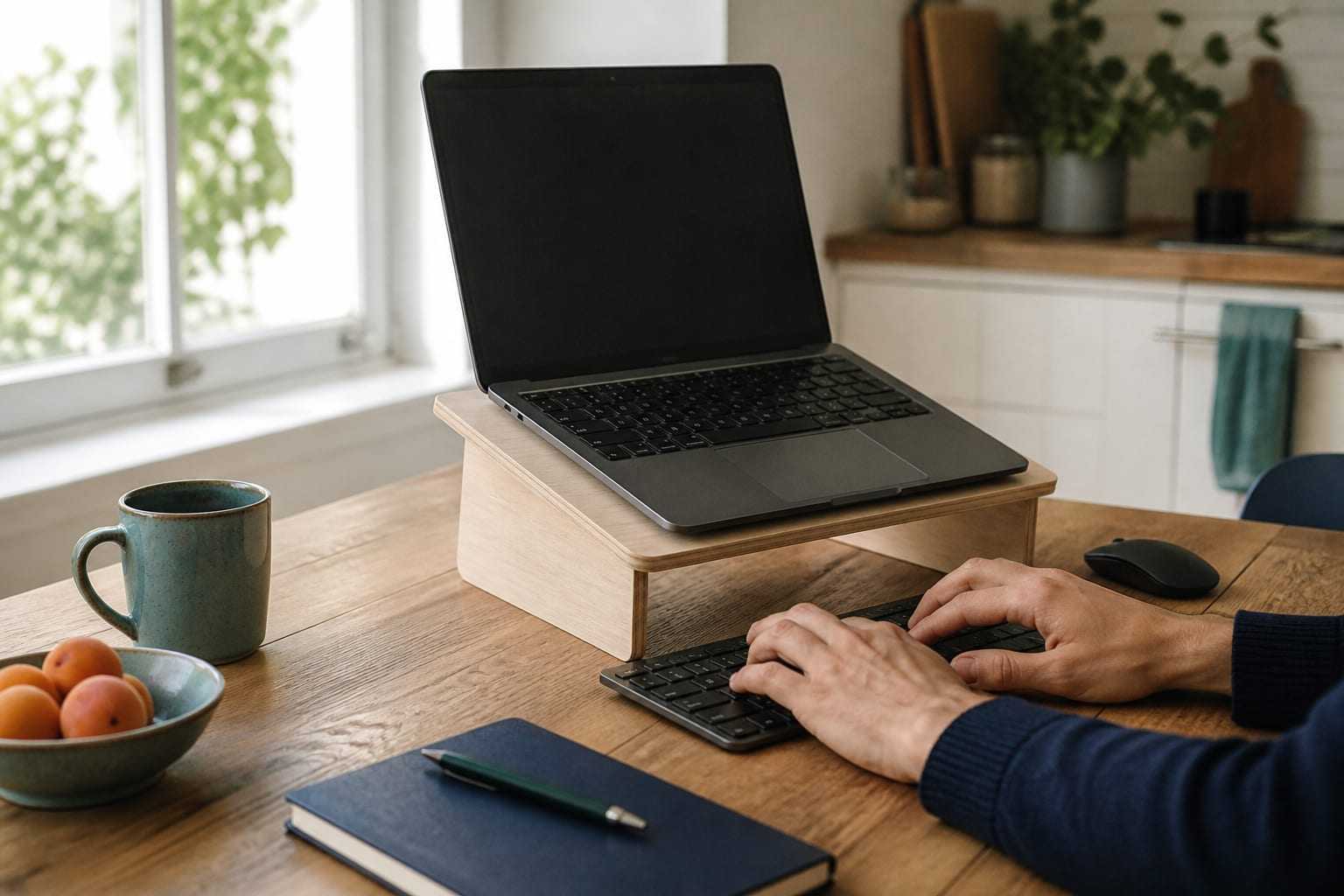
On a laptop, the screen and keyboard are fixed together. How do you resolve that compromise with a riser, external keyboard and mouse? Practical options for hybrid work.
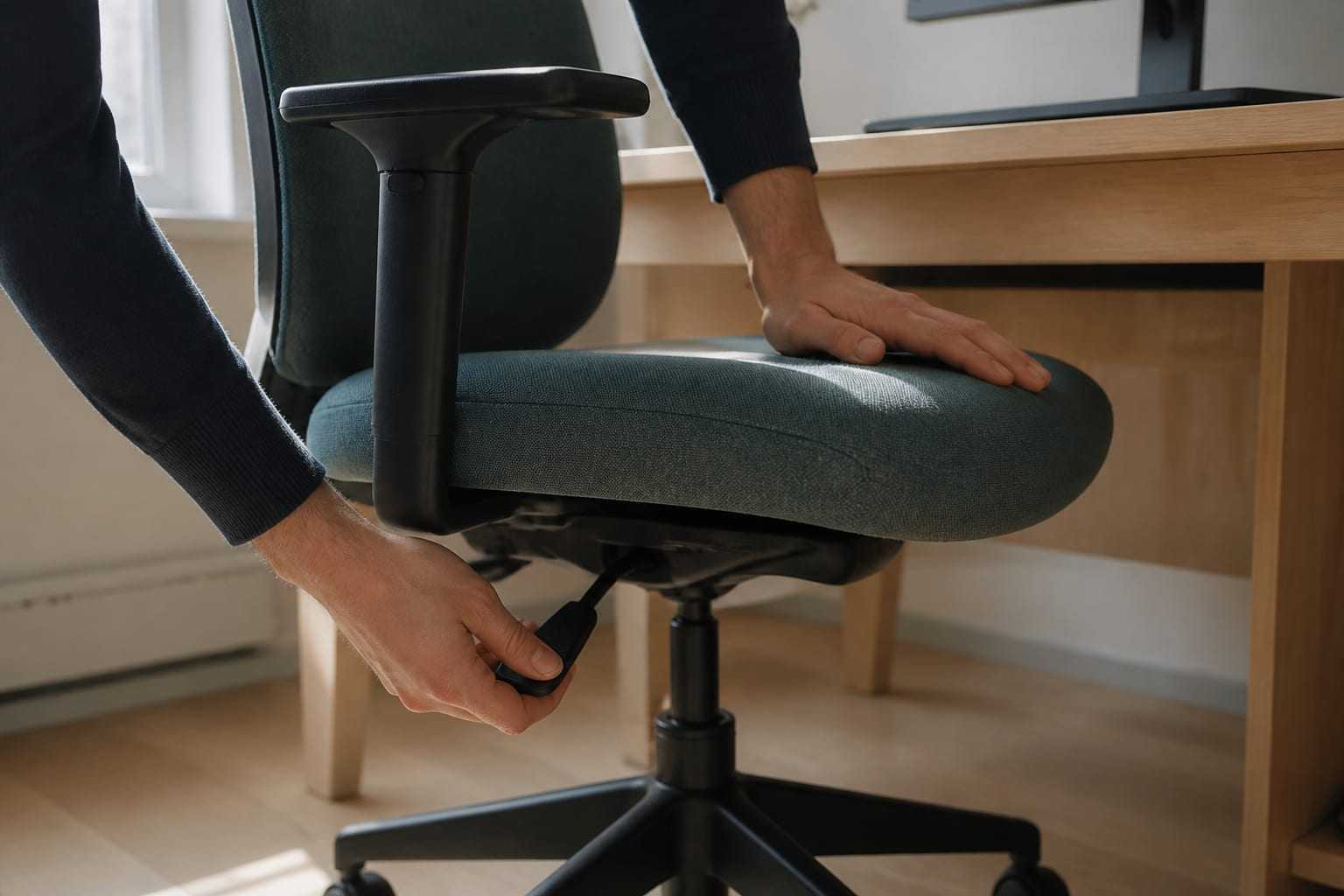
In what order should you adjust an office chair and desk? We walk through height, seat depth, lumbar support and armrest settings step by step.
What is appropriate for you can only be decided after an individual assessment.