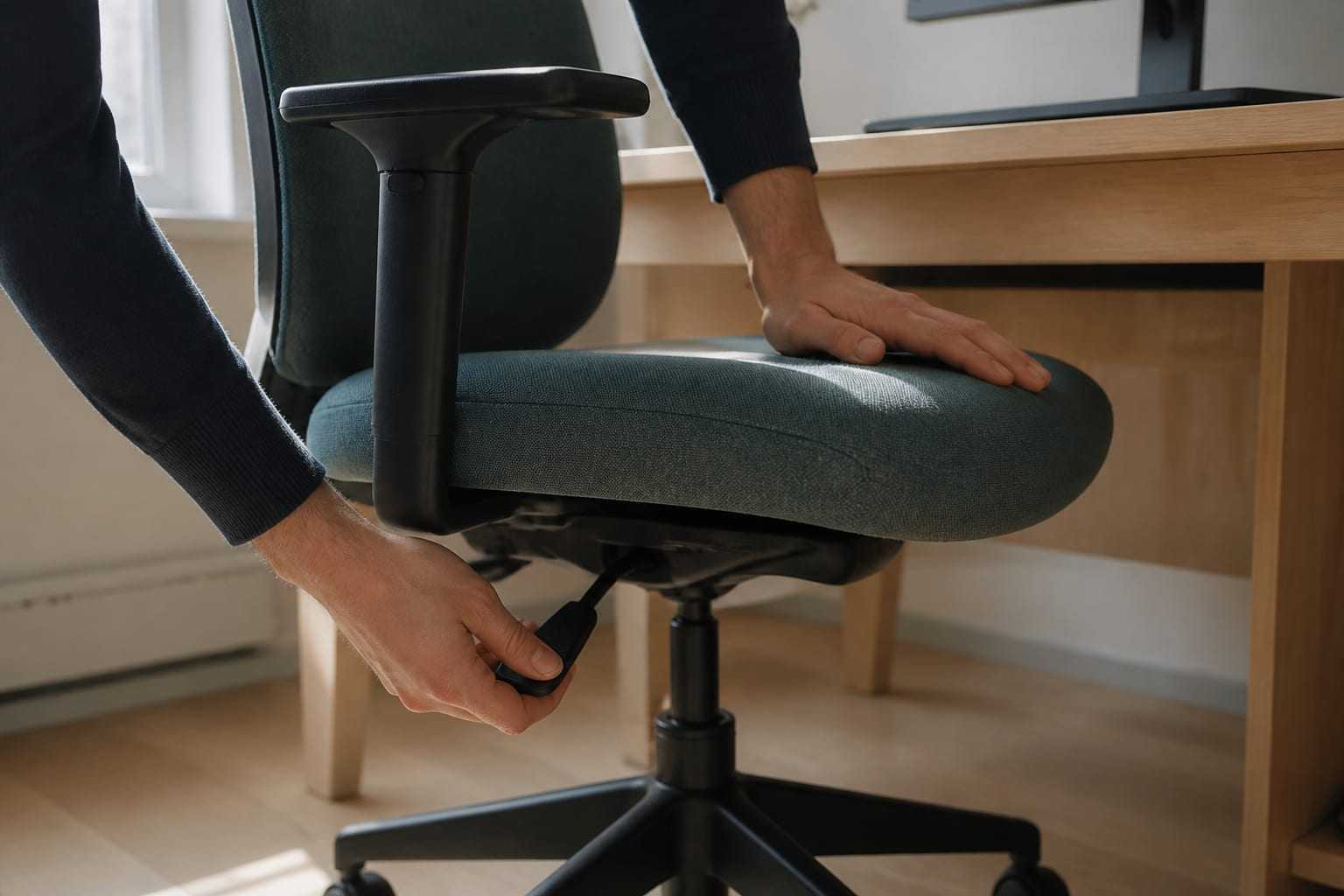
Desk and Chair Setup: A Sequenced, Practicable Path
In what order should you adjust an office chair and desk? We walk through height, seat depth, lumbar support and armrest settings step by step.
A detailed analysis in which each workstation is assessed for the person who works there and for the task that is done; mismatches are defined one by one.
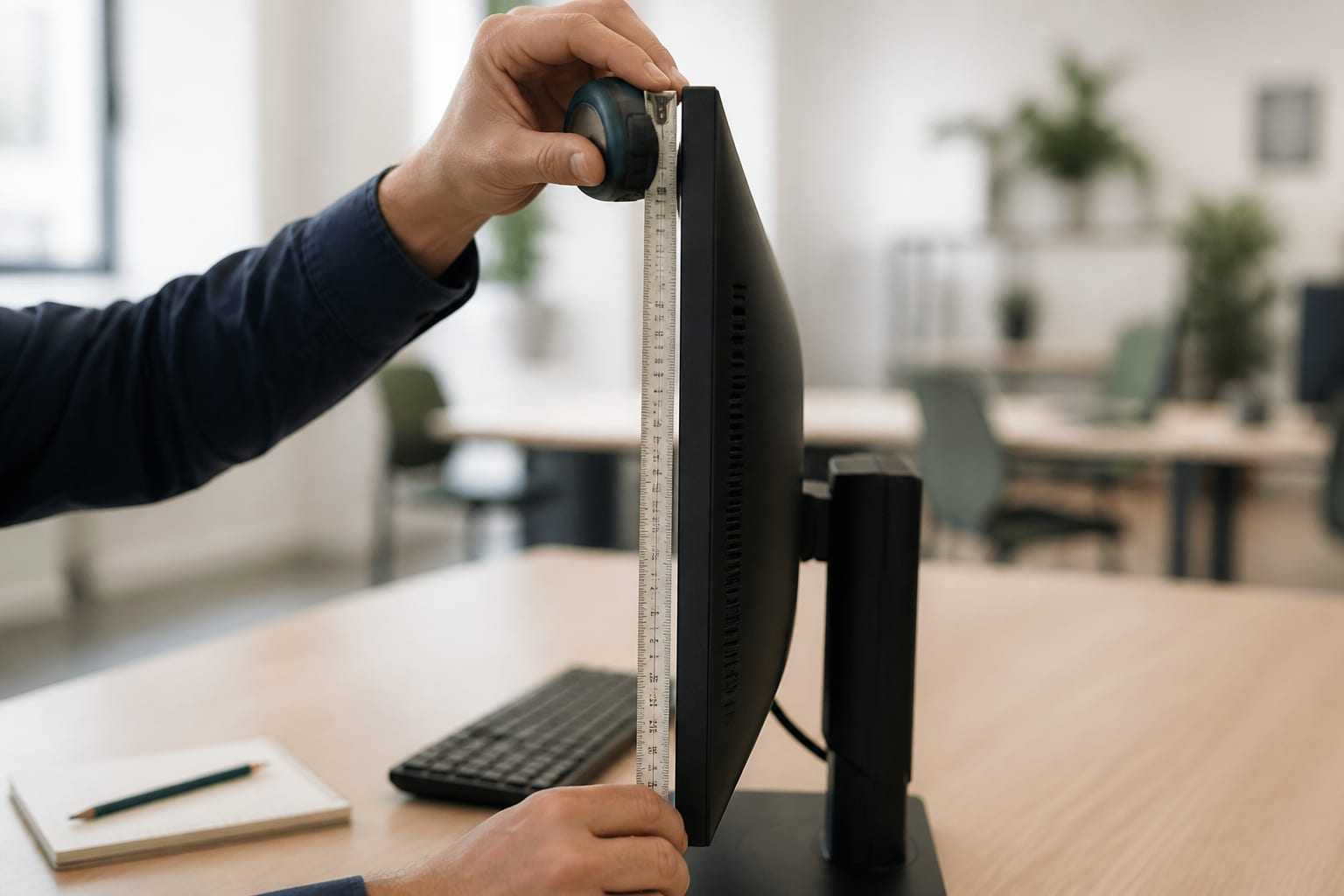
Workstation analysis examines how well the physical setup in which the employee spends a large part of the day fits that person’s body measurements and task content. The elements examined are desk height and use of the work surface, the chair’s sitting height and back and arm support, the height of the screen and its distance from the eyes, the position of the keyboard and mouse, whether the forearm is supported, and the reaching distance of frequently used objects.
These elements are taken not one by one but in relation to each other. A change in chair height may create a need for foot support; if desk height is fixed, keyboard position determines shoulder position. The analysis aims to define where this chain breaks.
The second field of examination is how the station is used. The same station creates different loading patterns for an employee who writes while looking at a screen for long periods and for an employee who spends the day on the phone. That is why task content and how it is distributed during the day are part of the analysis.
The analysis starts with observing the employee in their usual work pattern. Working position, the position of the arm and shoulder, neck angle, how the back is supported and wrist position are observed; measurable elements of the station are recorded. A short conversation then gathers information about work intensity during the day, the habit of changing position, and situations the employee finds difficult.
The findings are recorded at station level and at task-type level. That way a concrete adjustment recommendation can be prepared for a single station, and mismatches that repeat at similar stations can also be seen. In organisations with many similar stations it is possible to proceed through representative stations and generalise the findings at group level.
The analysis is not a diagnostic process. An employee’s musculoskeletal complaints are the subject of an appropriate health assessment; the work done within the analysis is to describe the physical working conditions in which the complaint arises and to bring out the elements that can be improved.
For each station, recommendations are gathered at three levels. The first level is adjustments that can be resolved by setting existing equipment; these can usually be applied the same day. The second level is adjustments that need a change in layout: the position of the screen, the place of the keyboard on the desk, repositioning frequently used materials.
The third level is adjustments that point to a need for extra equipment or furniture. This need is stated with its rationale and prioritised; stations where it is genuinely needed are separated from those where it can be resolved by adjustment. That way the organisation can take equipment decisions on an observation-based rationale.
When recommendations are prepared, whether the station belongs to one person or is used in rotation is decisive. At stations that belong to a person, adjustments are made once and kept; at shared stations the adjustments need to be repeatable quickly at each sitting. This distinction changes both the form of the recommended adjustment and the content that will be passed to the employee.
How workable the recommendations are also relates to how free the employee is to change their own station. In setups where adjustment authority is limited or the furniture is fixed, alternatives that would achieve the same outcome through a change in layout are recommended. That is why, for each finding, workable options according to the organisation’s conditions are defined, not a single solution.
A station-level record makes the ergonomics work repeatable. When a new employee starts or a team moves, it is known at which measurements the station was previously set. The same record also makes comparison possible at the reassessment stage.
In the corporate report, station findings are summarised at department and task-type level. Sample tables on the pages or in presentations are prepared to show the structure of the report and do not contain real organisation data.
The record also sets the content of employee training. Which mismatches repeat most often is seen in the analysis, and the training is built on those themes. That way employees proceed through situations they actually meet in their own work environment, rather than a general ergonomics account, and apply what they learn directly at their own stations.
Assessing desk height, usable surface area and the reaching distance of frequently used objects.
Addressing sitting height, back support, armrest position and, where needed, the need for foot support.
Assessing screen position in terms of load on the neck and shoulder region, and addressing multi-screen setups.
Examining the position of input devices, forearm support and wrist position in terms of repetitive movement.
Assessing layout and extra-equipment need at stations where the laptop is the main device.
Describing patterns of static loading and repetitive movement according to the type of work done at the station.
Recording findings at station and task-type level so that they form a basis for reassessment.
The stages follow one another; scope and duration depend on the organisation.
The work begins with understanding the organisation’s own conditions. How many people do which work, how long employees stay at a desk during the day, which departments are exposed to similar physical loading, and which complaints are frequently raised in the organisation are discussed together with the organisation’s representatives. Office layout, the variety of furniture and equipment in use, the remote-work ratio and the existing break arrangement are recorded at this stage. In this way, which areas the assessment will focus on, and at what depth, are determined according to the organisation’s real need.
Workstations and work habits are assessed from an ergonomic perspective on site, or online for organisations with remote employees. Physical layout elements such as desk height, chair settings, screen position, keyboard and mouse placement, laptop use and reach distance to frequently used objects are considered together with sitting behaviour, how often position is changed, static loading and repetitive movement patterns. The assessment is not made to diagnose the person, but to describe the fit between the employee and the work environment. The observations obtained are grouped and interpreted by department and task type.
Workable adjustment recommendations are prepared for the mismatches seen in the assessment. Recommendations are gathered under rearranging the workstation, using existing furniture and equipment correctly, considering additional support elements where needed, adjusting work behaviour and changing position, and reviewing work–break organisation. Each recommendation is prioritised with the organisation’s current resources and work pattern in mind; matters that can first be addressed through settings and arrangement are separated out. In this way, the organisation sees clearly where it should begin.
Training for employees is adapted to the organisation and the employee profile. Instead of a general presentation, content is prepared that proceeds from the findings that stood out in the assessment and covers recognising one’s own station, adjusting settings to one’s own measurements, changing position during the day and building an active-break habit. The training conveys basic information on musculoskeletal health in plain language and shows what the employee can change in their own work pattern and how. A separate briefing can be planned for managers on what can be followed at team level.
After the adjustments have been applied, a re-assessment is made and the changed situation is recorded. Which recommendations have been put into practice, in which areas the fit has improved and which topics remain a priority are considered comparatively. The process is documented in a Corporate Ergonomics Assessment Report that contains the organisation’s own findings; the report includes both the current situation and a follow-up plan for the next steps. In this way, the ergonomics work ceases to be a one-off event and becomes an ongoing topic the organisation can follow.
Scope is set together with the organisation. In organisations where variety of tasks and equipment is high, examining stations one by one is meaningful; where there are many similar stations it is more efficient to proceed through representative stations and generalise the findings at group level.
The analysis rests on observation and basic measurements; it does not require a device attached to the employee or a laboratory condition. That is why the work can be carried out in the organisation’s own office environment without disrupting the usual work pattern.
The duration varies with the number of stations to be examined, variety of tasks, number of departments and the organisation’s working hours. The timetable is planned, after the needs analysis is complete, so that it fits the organisation’s flow of work.
Findings and recommendations that relate to their own station are shared with the employee; in the report presented to the organisation the findings appear as a summary at department and task-type level, not person by person.
In what order should you adjust an office chair and desk? We walk through height, seat depth, lumbar support and armrest settings step by step.

Computer screen height, distance and tilt directly affect neck load. How do you set the screen for glare, dual monitors and text size?
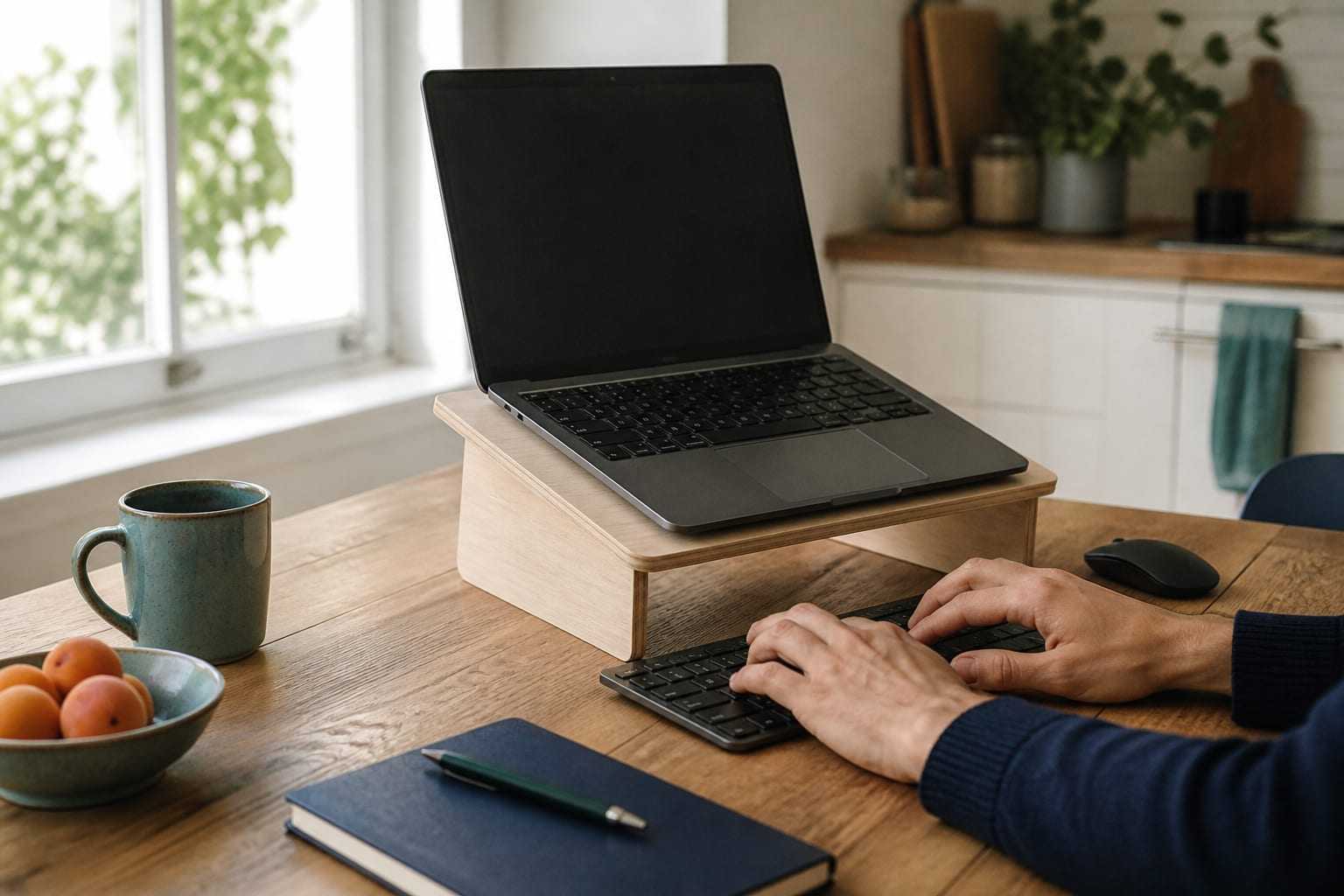
On a laptop, the screen and keyboard are fixed together. How do you resolve that compromise with a riser, external keyboard and mouse? Practical options for hybrid work.
Once headcount, work model and priority topics are clear, a process proposal can be prepared.