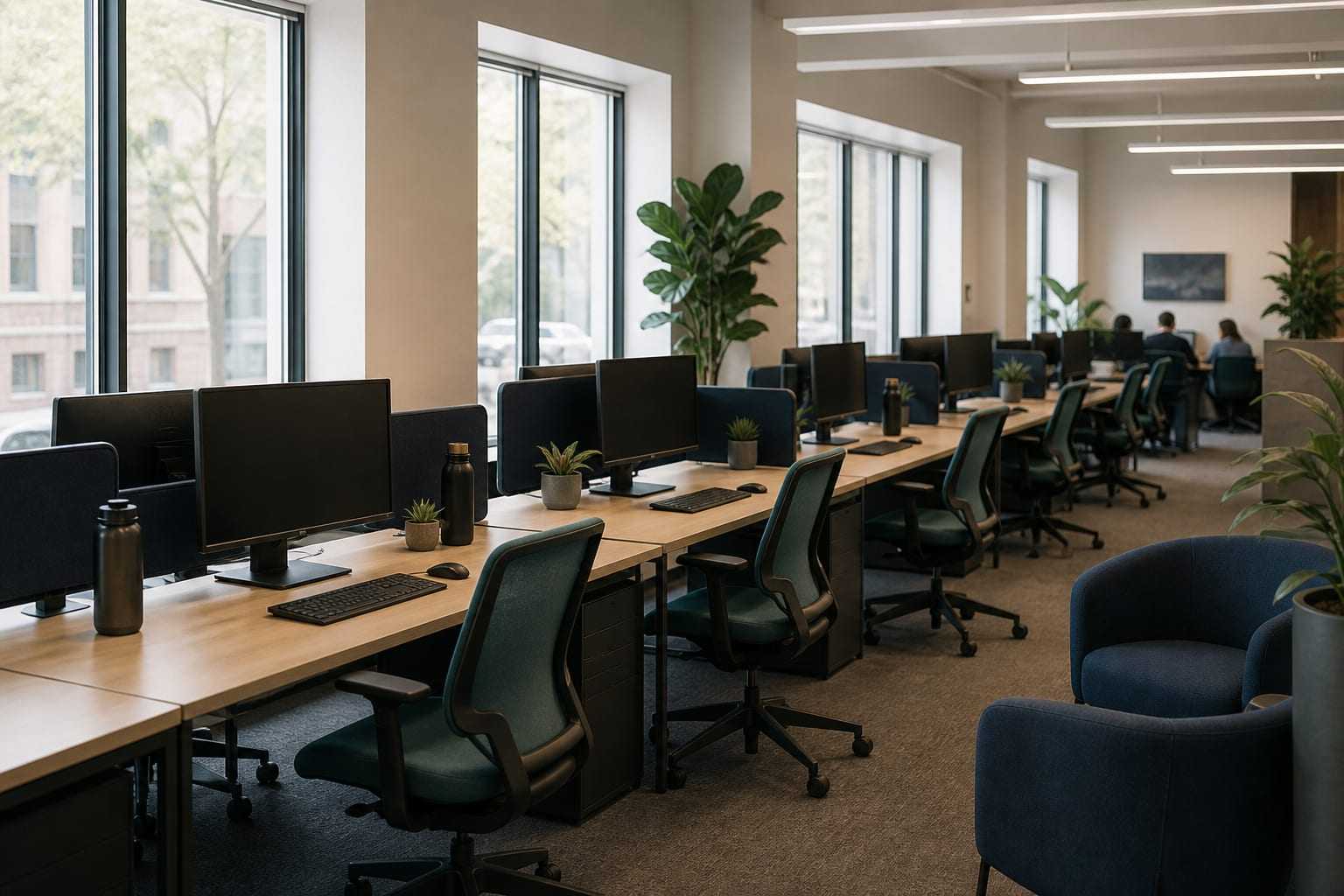
Office Ergonomics: Worker, Work and Workstation
Office ergonomics is not a search for one correct posture. We explain, step by step, how to fit the worker, the work and the workstation together.
A training programme prepared from the organisation’s own assessment findings, rather than a generic presentation, and aimed at the employee practising at their own station.
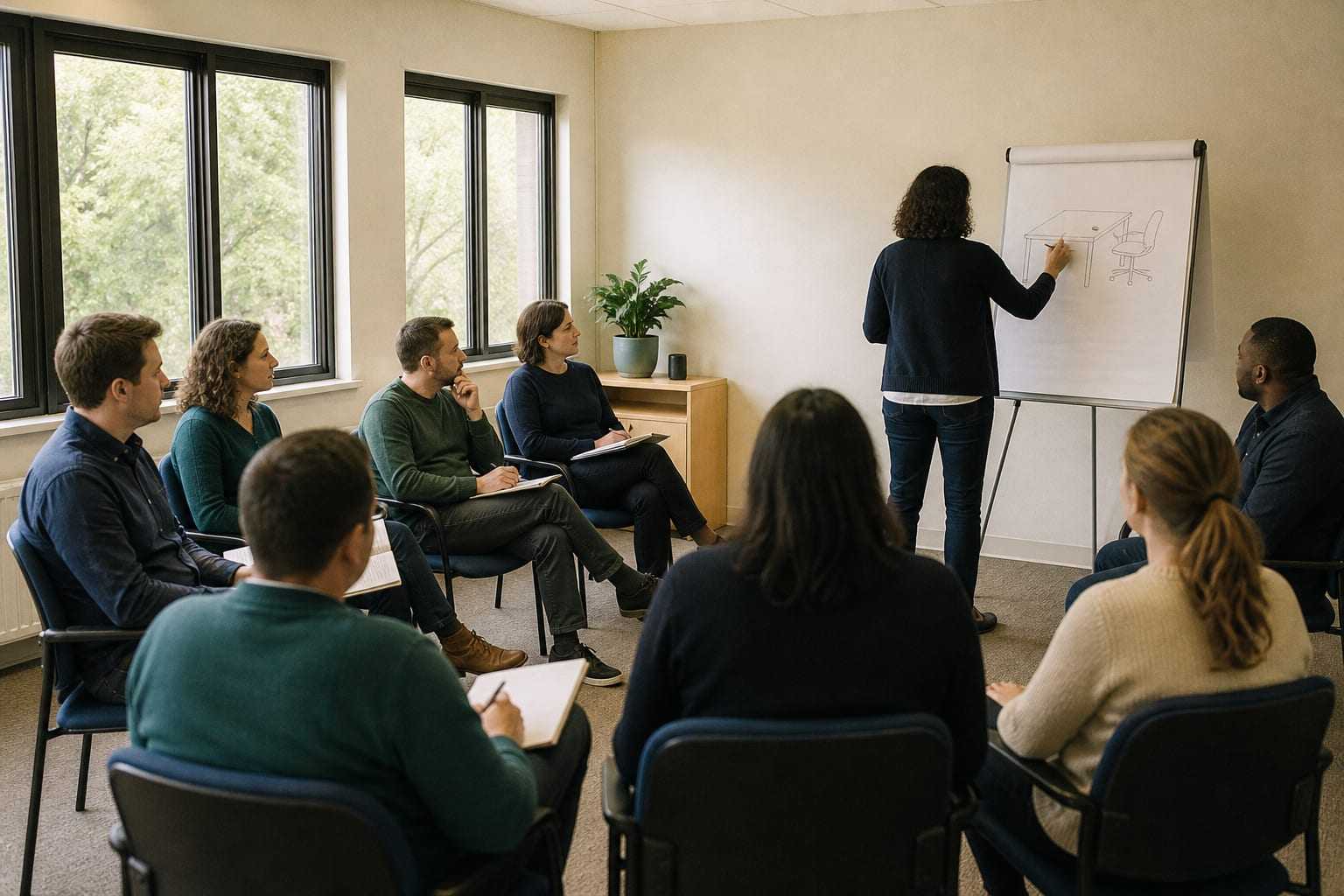
Ergonomics training often consists of generic content told in the same way to every organisation. Even when this content gives accurate information, it does not turn into behaviour because it does not show the employee what to do at their own desk. In this programme the training is built on the findings of an assessment made in the organisation’s own work environment.
When the content is prepared, the organisation’s employee profile, task types, equipment in use and the share of remote work are taken into account. A team that works mainly on laptops and a team that uses multiple screens do not work with the same content. In the same way, load on the neck and shoulder stands out in a team that spends the day on the phone, while repetitive wrist movement stands out in a team with intensive data entry.
The training runs information and practice together. Core information on musculoskeletal health is passed on in plain language; employees then practise adjustment at their own stations. The aim is that after the training the employee is in a position to make adjustments on their own.
The training is usually built around these themes: the basic frame of musculoskeletal health and how physical load accumulates; recognising the workstation and making adjustments for the person; sitting behaviour and the importance of changing position during the day; the work–break pattern and active-break practice; points to watch in laptop and portable work setups.
For hybrid teams, arranging the home workspace is treated as a separate theme. For managers, meeting planning, the structure of work blocks and supporting a break habit at team level can be planned as a separate briefing.
Among the themes are also concrete questions employees meet every day: to what height the screen should be brought, how the chair’s back support should be set, where the keyboard and mouse should sit on the desk, when foot support is needed. These questions are answered through the equipment in front of the employee, not through abstract principles.
The training content does not include diagnosis, treatment or an individual exercise prescription. Employees who have an existing complaint are advised to seek an appropriate health assessment, and it is stated clearly which signs should be assessed without delay.
The training can be run in person or online. The in-person format is preferred for desk teams because it lets employees practise at their own stations. The online format is useful for bringing together teams in different locations and teams that work from home in the same content; in that case employees practise in their own workspaces.
Group size is planned according to the time that will be given to practice. Smaller groups are possible in practice-heavy sessions, and wider participation in information-heavy sessions. The number of sessions and the timetable are set together according to the organisation’s shift and work pattern.
Whether participation is useful depends on the session sitting inside the employee’s own working day. In training placed outside working hours or in intense delivery periods the practice section weakens. That is why the timetable is planned with departments’ work intensity in mind, and the same content is repeated for different groups when needed.
Participants are left with a short reference that reminds them of the adjustments practised in the training. This content covers the steps for setting their own station and active-break recommendations that can be applied during the day; it is prepared so that it can be shared on the organisation’s internal communication channels.
The organisation is given a post-training summary: which themes were covered, common questions that stood out during participation, and the difficulties employees mentioned most often. This summary is used to set the later stages of the ergonomics work and the themes to follow in the follow-up period.
Training is the fourth stage of the consultancy model and can also be planned on its own. When it is run together with the assessment stage, though, the content is more concrete because it rests on the organisation’s own findings.
Adapting the training content according to the employee profile, task types and assessment findings.
Plain information on musculoskeletal health and physical load, grounded in a scientific frame.
Employees setting their own desk, chair, screen and input-device adjustments according to their own measurements.
Working on the habit of changing position during the day and on reducing static loading.
Trying together short movement recommendations that can be applied in the work area without equipment.
A separate content theme for teams that work with portable devices and in home workspaces.
Meeting planning, work blocks and supporting a break habit at team level.
The stages follow one another; scope and duration depend on the organisation.
The work begins with understanding the organisation’s own conditions. How many people do which work, how long employees stay at a desk during the day, which departments are exposed to similar physical loading, and which complaints are frequently raised in the organisation are discussed together with the organisation’s representatives. Office layout, the variety of furniture and equipment in use, the remote-work ratio and the existing break arrangement are recorded at this stage. In this way, which areas the assessment will focus on, and at what depth, are determined according to the organisation’s real need.
Workstations and work habits are assessed from an ergonomic perspective on site, or online for organisations with remote employees. Physical layout elements such as desk height, chair settings, screen position, keyboard and mouse placement, laptop use and reach distance to frequently used objects are considered together with sitting behaviour, how often position is changed, static loading and repetitive movement patterns. The assessment is not made to diagnose the person, but to describe the fit between the employee and the work environment. The observations obtained are grouped and interpreted by department and task type.
Workable adjustment recommendations are prepared for the mismatches seen in the assessment. Recommendations are gathered under rearranging the workstation, using existing furniture and equipment correctly, considering additional support elements where needed, adjusting work behaviour and changing position, and reviewing work–break organisation. Each recommendation is prioritised with the organisation’s current resources and work pattern in mind; matters that can first be addressed through settings and arrangement are separated out. In this way, the organisation sees clearly where it should begin.
Training for employees is adapted to the organisation and the employee profile. Instead of a general presentation, content is prepared that proceeds from the findings that stood out in the assessment and covers recognising one’s own station, adjusting settings to one’s own measurements, changing position during the day and building an active-break habit. The training conveys basic information on musculoskeletal health in plain language and shows what the employee can change in their own work pattern and how. A separate briefing can be planned for managers on what can be followed at team level.
After the adjustments have been applied, a re-assessment is made and the changed situation is recorded. Which recommendations have been put into practice, in which areas the fit has improved and which topics remain a priority are considered comparatively. The process is documented in a Corporate Ergonomics Assessment Report that contains the organisation’s own findings; the report includes both the current situation and a follow-up plan for the next steps. In this way, the ergonomics work ceases to be a one-off event and becomes an ongoing topic the organisation can follow.
Duration and number of sessions are planned according to the organisation’s need. What determines them is the number of participants, the time given to practice, variety of tasks and the organisation’s shift pattern. A practice-heavy session is planned differently from a session that contains information only.
No advance preparation is needed. For the practice section it is enough that employees are at their own stations, or, in online participation, in their own workspaces. This lets the adjustments be made on the real work setup.
Teams in different locations or working from home can be brought together in the same content through the online format. The practice section is run at the same time in participants’ own workspaces; themes that relate to the home workspace are addressed separately for these groups.
It can. When the training is run together with the assessment stage, though, the content is more concrete because it rests on the organisation’s own findings, and employees proceed through situations they meet in their own work environment.
Follow-up and reassessment are a separate stage of the consultancy model and can be included in the scope. In the follow-up period, how far the adjustments recommended in the training have been kept up, and which themes need to be taken up again, are assessed.
Office ergonomics is not a search for one correct posture. We explain, step by step, how to fit the worker, the work and the workstation together.
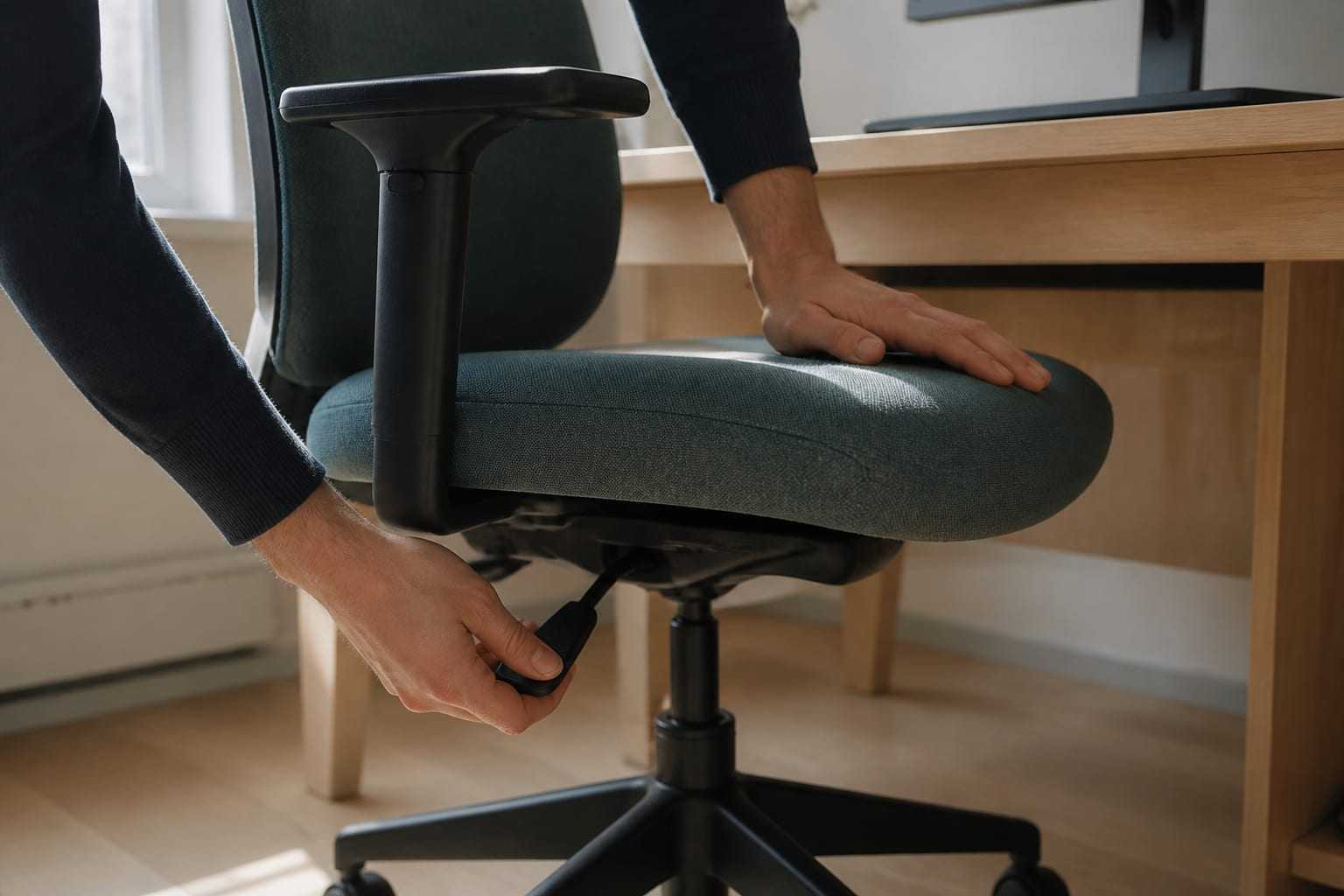
In what order should you adjust an office chair and desk? We walk through height, seat depth, lumbar support and armrest settings step by step.
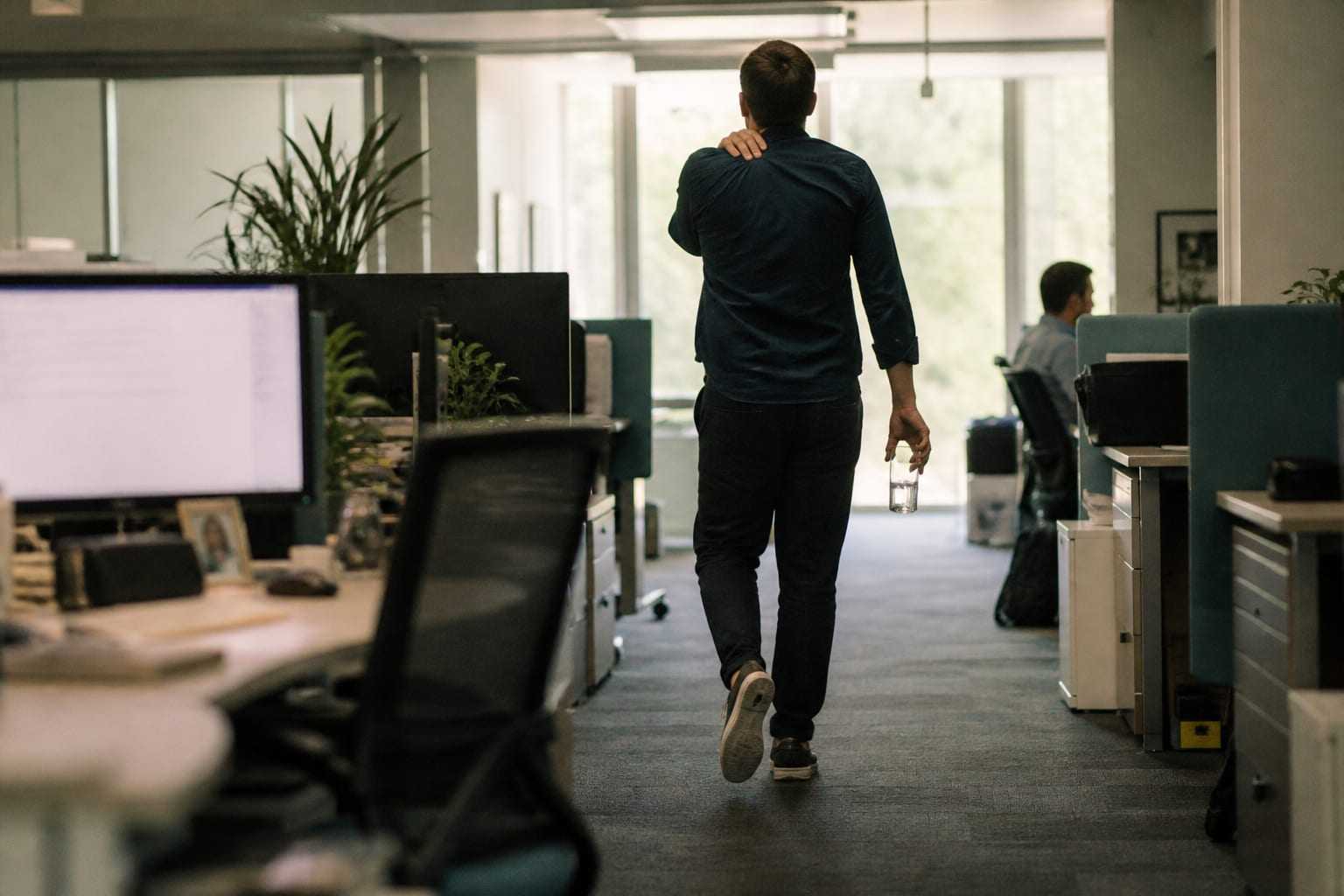
An active break is a short interval that changes position and movement. We explain how it differs from a passive break, how often to take one, and what to do in 1–3 minutes.
Once headcount, work model and priority topics are clear, a process proposal can be prepared.