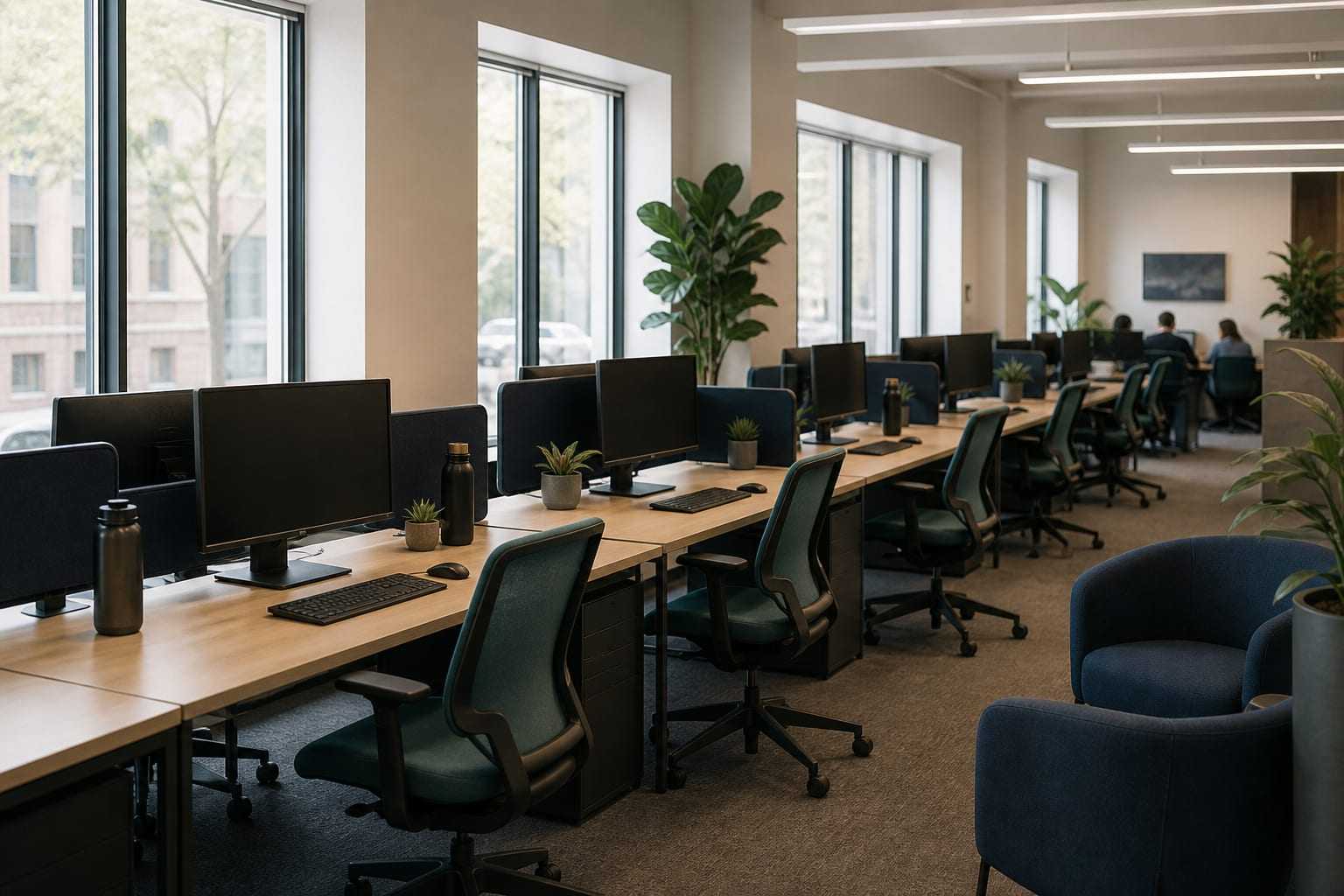
Office Ergonomics: Worker, Work and Workstation
Office ergonomics is not a search for one correct posture. We explain, step by step, how to fit the worker, the work and the workstation together.
An assessment that defines, prioritises and reports the factors in the work environment that increase physical load on the musculoskeletal system.
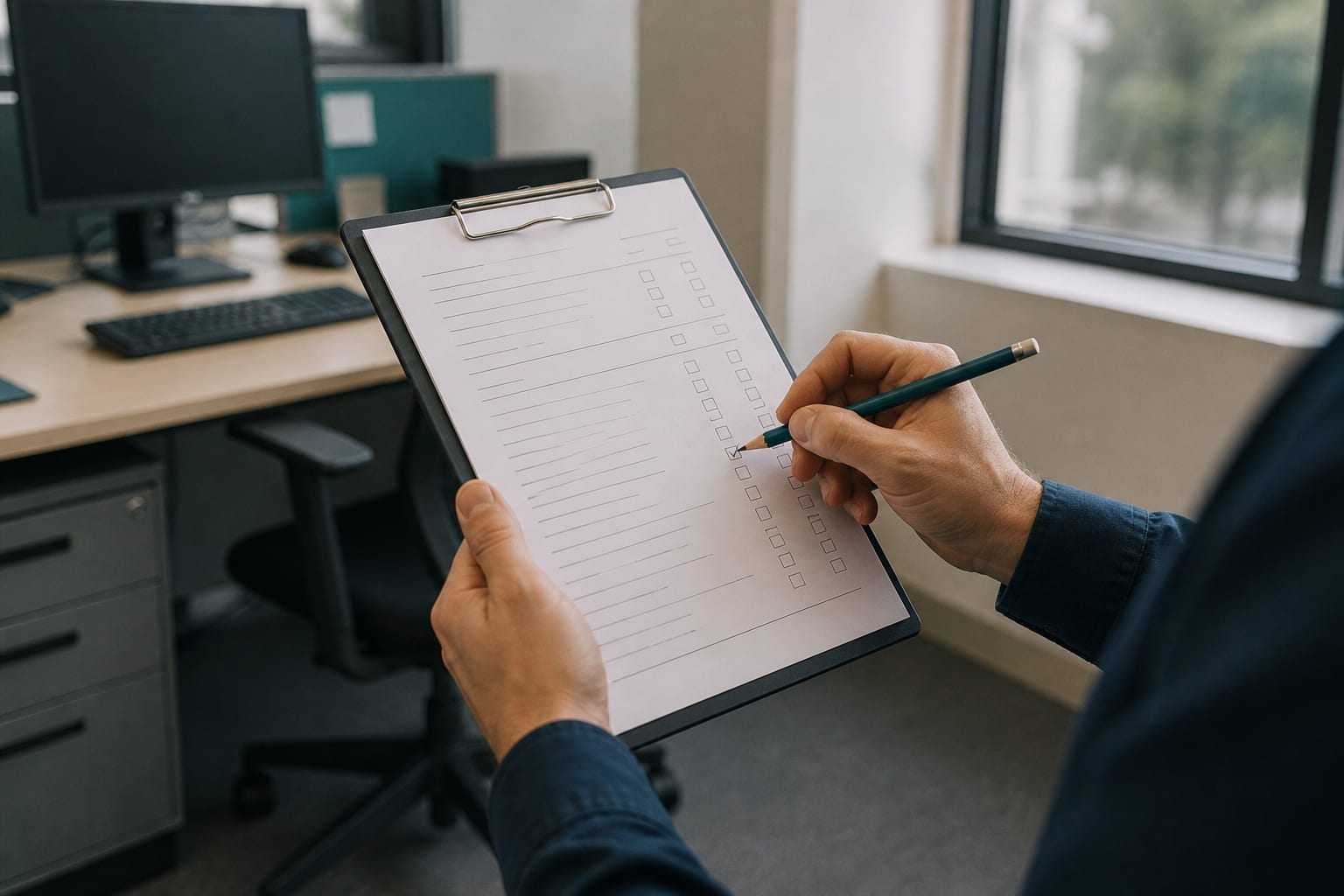
An ergonomic risk assessment systematically defines the factors in the work environment that increase load on the musculoskeletal system. The subject of the assessment is not the person’s health status, but the working conditions themselves: how long a position is held, how often a movement is repeated, how force-demanding tasks are done, and how far the work pattern allows for this loading.
This work is not a health screening and does not produce an individual diagnosis. Its output is a priority list that shows which working conditions the organisation needs to improve, and in which order. That way improvement decisions rest on observations made in the organisation’s own work environment, not on general assumptions.
The assessment does not replace the organisation’s occupational health and safety processes. Carrying out legal obligations is the responsibility of the organisation’s own occupational health and safety structure; the work here is a technical assessment that contributes to that process from a physiotherapy and ergonomics perspective.
The first theme is static loading: fixed postures held for a long time, unsupported arm and shoulder positions, the neck and trunk being held at the same angle continuously. This is the most common form of loading in desk work and usually continues unnoticed.
The second theme is repetitive movement. In tasks where the same movement is repeated intensively and at short intervals, the amplitude of the movement, its speed and the pauses between repetitions are assessed together. The third theme is demanding positions and reaching distances: layouts that require reaching, turning or leaning forward.
The fourth theme is the conditions created by the flow of work. Unbroken work blocks, task patterns that make it hard to change position, and teams in which a break habit has not settled prepare the ground for physical load to accumulate. That is why the risk assessment covers not only the physical setup but also work organisation.
These themes are not independent of each other. A mismatch that comes from screen height, when it combines with long unbroken work blocks, creates a different loading picture than it would on its own. That is why the assessment tries to define which conditions sit together in the same employee group, rather than scoring each theme separately.
The risk themes that are defined are prioritised by looking together at how many employees they affect, how long they last, and how easily they can be improved under current conditions. Themes that can be reduced quickly by adjustment are grouped separately from themes that need a change in layout, equipment or work flow.
Findings are presented at department and task-type level inside the Corporate Ergonomics Assessment Report. The report explains, with its rationale, why a given condition has been defined as a risk theme; that way different units inside the organisation understand the same finding in the same way.
The report does not contain employees’ individual health information. Observations that belong to a person are shared only with that employee; the content presented to the organisation is made of grouped findings.
The ergonomic risk picture is not fixed. Moving to a new office layout, team growth, a change in task content or an increase in the share of remote work can change the findings of the previous assessment. That is why the risk assessment is designed as a piece of work that is updated, not as a one-off document.
Reassessment is done comparatively with the previous findings: which themes have improved, which are being kept, which new conditions have appeared. This comparison lets the organisation follow its development on the ergonomics theme with its own data.
How the assessment is shared inside the organisation also affects the outcome. Sharing the findings in the same frame with human resources, the occupational health and safety unit and the relevant department managers prevents improvement decisions from being read differently in different units. That is why the report is written so that it keeps the technical detail while building a shared language inside the organisation.
An ergonomic risk assessment is more useful when it is designed as a piece of work that reviews conditions at regular intervals, rather than as a reaction to the organisation’s existing complaints. This approach lets improvement decisions be taken on a whole-organisation order of priority, not through individual requests.
Defining fixed postures held for a long time and unsupported arm and shoulder positions.
Examining the movement pattern, frequency and pauses between movements in tasks that involve intensive repetition.
Addressing layouts that require reaching, turning or leaning forward, and reaching distances.
Defining mismatches that arise from desk, chair, screen and input-device setup as risk themes.
Assessing unbroken work blocks and the break pattern in terms of the accumulation of physical load.
Ordering risk themes by the number of employees affected, duration and how improvable they are.
Reporting findings at department and task-type level, together with their rationales.
Updating findings comparatively when working conditions change.
The stages follow one another; scope and duration depend on the organisation.
The work begins with understanding the organisation’s own conditions. How many people do which work, how long employees stay at a desk during the day, which departments are exposed to similar physical loading, and which complaints are frequently raised in the organisation are discussed together with the organisation’s representatives. Office layout, the variety of furniture and equipment in use, the remote-work ratio and the existing break arrangement are recorded at this stage. In this way, which areas the assessment will focus on, and at what depth, are determined according to the organisation’s real need.
Workstations and work habits are assessed from an ergonomic perspective on site, or online for organisations with remote employees. Physical layout elements such as desk height, chair settings, screen position, keyboard and mouse placement, laptop use and reach distance to frequently used objects are considered together with sitting behaviour, how often position is changed, static loading and repetitive movement patterns. The assessment is not made to diagnose the person, but to describe the fit between the employee and the work environment. The observations obtained are grouped and interpreted by department and task type.
Workable adjustment recommendations are prepared for the mismatches seen in the assessment. Recommendations are gathered under rearranging the workstation, using existing furniture and equipment correctly, considering additional support elements where needed, adjusting work behaviour and changing position, and reviewing work–break organisation. Each recommendation is prioritised with the organisation’s current resources and work pattern in mind; matters that can first be addressed through settings and arrangement are separated out. In this way, the organisation sees clearly where it should begin.
Training for employees is adapted to the organisation and the employee profile. Instead of a general presentation, content is prepared that proceeds from the findings that stood out in the assessment and covers recognising one’s own station, adjusting settings to one’s own measurements, changing position during the day and building an active-break habit. The training conveys basic information on musculoskeletal health in plain language and shows what the employee can change in their own work pattern and how. A separate briefing can be planned for managers on what can be followed at team level.
After the adjustments have been applied, a re-assessment is made and the changed situation is recorded. Which recommendations have been put into practice, in which areas the fit has improved and which topics remain a priority are considered comparatively. The process is documented in a Corporate Ergonomics Assessment Report that contains the organisation’s own findings; the report includes both the current situation and a follow-up plan for the next steps. In this way, the ergonomics work ceases to be a one-off event and becomes an ongoing topic the organisation can follow.
It does not. Carrying out legal obligations is the responsibility of the organisation’s own occupational health and safety structure. The work here is a technical assessment that addresses physical load on the musculoskeletal system from a physiotherapy and ergonomics perspective, and it is planned so that it can contribute to existing processes.
The assessment rests on observing employees in their usual work pattern, examining workstations and holding short conversations with employees. Observations are interpreted by grouping them at task-type and department level; results are reported together with their rationales.
No. The report presented to the organisation does not contain individual health information or a finding that identifies a person. Personal observations are shared only with the employee themselves; corporate content is made of grouped findings.
A fixed frequency is not recommended. What determines the need to repeat is changes in office layout, a difference in team size, a change in task content and a change in the share of remote work. The reassessment timetable is planned together with the organisation according to these factors.
The report can be used as a basis for prioritising improvement decisions and for equipment and layout planning. It also forms a basis for preparing employee-training content according to the organisation’s own findings.
Office ergonomics is not a search for one correct posture. We explain, step by step, how to fit the worker, the work and the workstation together.

What sedentary behaviour is, why total sitting time matters independently of posture, and how you can realistically build movement into the working day.
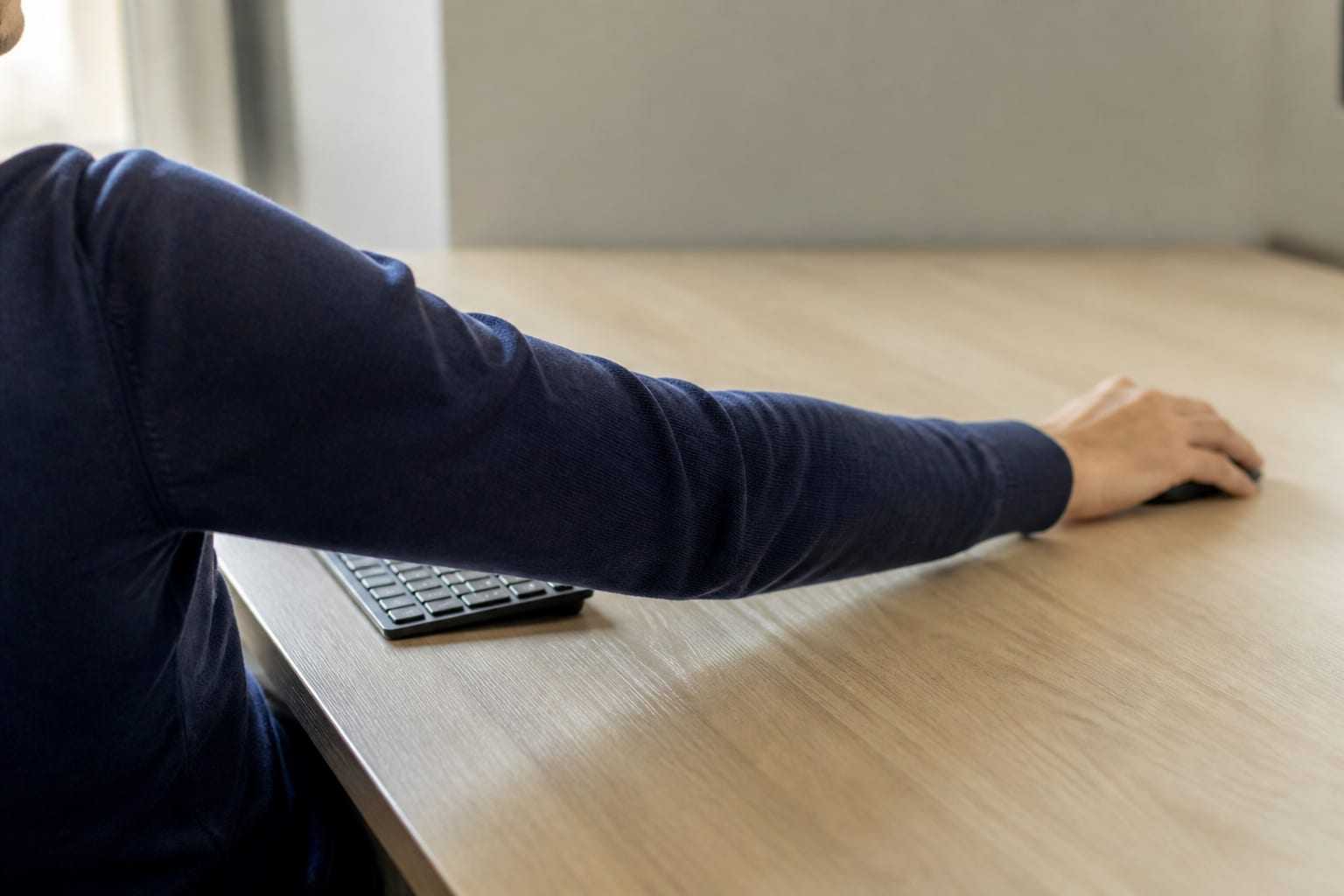
In desk workers, shoulder symptoms are often linked to sustained low-level loading. We explain the role of mouse reach, armrests and movement variety.
Once headcount, work model and priority topics are clear, a process proposal can be prepared.