Prolonged Sitting: Sedentary Time in the Working Day
Prolonged sitting is not only a posture topic; total sitting time is treated as a separate heading even in people who exercise regularly.
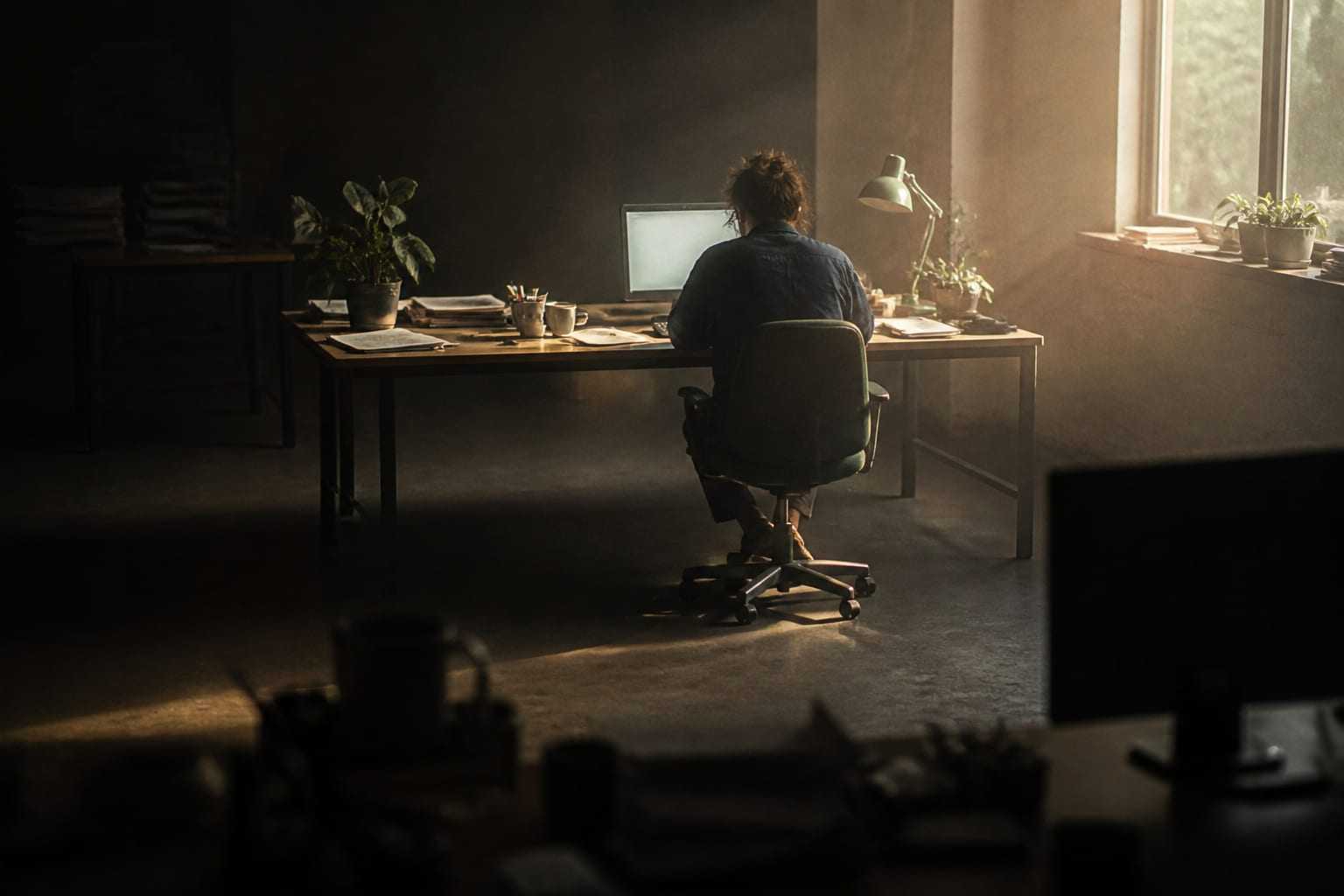
Prolonged sitting is most often discussed as a posture topic: how to sit, which chair to use, how to support the low back. These are important questions, but they are not the whole topic. Sitting is treated as a heading of its own because total sitting time has been defined as a health variable in its own right.
This article takes sedentary behaviour as a whole: what it means, why it matters independently of posture, what the difference is between “doing exercise” and “reducing sitting time”, and how movement can realistically be placed in a working day. The relationship between sitting and load on the low-back region, and chair–desk settings, are a separate topic; you will find them in the prolonged sitting and low-back health guide.
What is sedentary behaviour?
The World Health Organization defines sedentary behaviour as any period spent awake with low energy expenditure: sitting, being in a semi-reclined position, or lying down. There is no “poor posture” criterion inside the definition; the criterion is that energy expenditure is low.
The practical consequence of this definition is this: sitting perfectly in a well-adjusted chair is still sedentary behaviour. Ergonomic settings affect the comfort of sitting and musculoskeletal load; they do not stop sitting from being sedentary.
“Inactivity” and “prolonged sitting” are not the same thing
These two concepts are often used interchangeably, but they are different:
- Not being physically active enough means not meeting weekly physical activity recommendations.
- Being sedentary means spending a large part of the day with low energy expenditure.
A person can be both sufficiently active and highly sedentary at the same time. Someone who works at a desk may walk or train regularly after work and meet the weekly recommendation, yet still spend eight or nine hours of the work day sitting without interruption. The reverse is also possible: a person in physical work moves a great deal during the day, but may not meet the recommendations because they do no planned activity of moderate-to-high intensity.
Occupational health sources make this distinction clearly and note that the health risks of sedentary work are not fully offset by leisure-time exercise. This is not a statement that reduces the value of exercise; it is a statement that there are two different aims.
Why is total sitting time a separate heading?
The World Health Organization’s 2020 guideline includes recommendations on the relationship between sedentary behaviour and health outcomes as a separate heading for the first time. In the organisation’s fact sheet it is noted that a high level of sedentary behaviour in adults is associated with all-cause death, death from cardiovascular disease and cancer, and the incidence of cardiovascular disease, cancer and type 2 diabetes.
These associations are associations defined at population level; they are not a prediction about any one person’s future. The conclusion guidelines draw from this is calm and practicable: every age group should limit the time it spends sedentary, and replacing part of that time with physical activity of any intensity is useful. Another emphasis of the guidelines is this: doing a little is better than doing none, and every kind of physical activity counts.
On the musculoskeletal side as well, prolonged uninterrupted sitting is among the factors associated with work-related complaints — but here what is decisive is not duration alone, but how uninterrupted the position is and how little opportunity there is to change it. We address this dimension for the low back in prolonged sitting and low-back health, and for the neck and shoulder in the neck pain at a desk guide.
Doing exercise is not the same as reducing sitting time
This distinction is the most commonly misunderstood part of the topic. The difference between the two aims is as follows:
| Aim | Typical path | |
|---|---|---|
| Increasing physical activity | Meeting weekly activity recommendations | Planned training, walking, swimming, cycling |
| Reducing sitting time | Breaking up the day’s uninterrupted sitting blocks | Standing up, walking briefly, working standing |
Sources that review workplace interventions note that programmes aimed only at increasing physical activity do not reduce sitting time by themselves. Arrangements that address this behaviour directly are needed in order to reduce sitting. By contrast, you do not need intense activity to break up sitting: any movement that interrupts the sitting position and works the leg muscles enough serves this aim.
So there is no need to choose between the two. The weekly activity aim and the intra-day sitting-time aim are pursued in parallel. How a physical activity plan is structured is addressed on the exercise and physical activity page.
Placing movement in the working day
Short and frequent pauses
Reviews of workplace interventions report that patterns with one-to-two-minute short breaks every half hour reduce time spent sitting at work more than two 15-minute long breaks a day. Short pauses also remain practicable because they interrupt the flow of work less. How an active break is planned is set out in the active break guide.
Height-adjustable desks
Height-adjustable desks have been reported to be able to reduce time spent sitting at work. But there is an important caution that the sources underline: having the desk does not by itself mean it is used. Finding the adjustment effortful and not being able to set up a comfortable standing position are common barriers to use. That is why information and habit-building work are added alongside the equipment investment.
Small choices distributed through the day
- Doing part of meetings standing or walking
- Using the stairs instead of the lift
- Walking short distances, getting off public transport one stop early
- Taking phone calls standing
- Placing the printer, water cooler or bin farther from the desk
- Building a short walking routine into the lunch break
None of these is decisive on its own; their effects appear through total time.
Realistic strategies for office and hybrid workers
When working from home, sitting time usually lengthens further: the walk to work disappears, meetings are stacked back to back, and opportunities to walk around the office are lost. By contrast, freedom to implement things at home is higher.
A practicable framework:
- Take a measurement. Noting roughly, once, how long you sit without interruption in a work day is more useful than estimates.
- Target the longest block. Instead of redesigning the whole day, start by breaking up the longest uninterrupted sitting block.
- Tie your pauses to a task. Plans that depend on willpower are the first to be abandoned on busy days.
- Review the meeting pattern. Leaving five minutes between consecutive online meetings is a team-level decision more than a personal solution.
- Account for travel. In hybrid work the movement difference between office days and home days is marked; adding a walk deliberately on home days closes that gap.
- Go gradually. Placing one habit and then moving to a second gives a more lasting result than trying to change the target in a week.
On the organisational side, systematic examination of sitting behaviour, break organisation and the work pattern falls under sitting and work pattern and ergonomics consulting; topics relating to the work environment as a whole are addressed in the office ergonomics guide.
What do the physical activity recommendations say?
The World Health Organization recommends at least 150 minutes of moderate-intensity physical activity per week for adults and adds muscle-strengthening work. According to the organisation’s data, about one third of adults do not meet this level. It is useful to keep the language of the guidelines in mind: doing a little is better than doing none, every kind of physical activity counts, and muscle strengthening is useful for everyone.
When this framework is thought together with aims for sitting time during the day, it forms a consistent plan: increase weekly activity, break up daily sitting blocks.
When should you see a health professional?
Reducing sitting time and increasing physical activity are safe changes for most people. In the following situations it is appropriate to speak with a health professional first; this list is not a list of barriers, but a list of situations in which the plan needs to be adapted to the person.
Situations in which it is appropriate to speak before increasing activity:
- Presence of a known heart, lung or metabolic disease
- Uncontrolled high blood pressure
- Pregnancy or the postpartum period
- Having been inactive for a long time and not being sure where to start
- Presence of an ongoing musculoskeletal complaint
Signs that need assessment without delay:
- Pain, pressure or tightness in the chest during activity or at rest
- Unexpected and gradually increasing shortness of breath
- Palpitations, dizziness, fainting, or a feeling of being about to faint
- Sudden swelling, warmth and pain in one leg
- Progressive loss of strength in an arm or a leg, numbness that is spreading
- Fever, unexplained weight loss, or pain that does not ease with rest through the night
Signs such as chest pain, sudden and severe shortness of breath, or fainting require urgent assessment and should not be managed through article content.
Situations in which making an appointment is reasonable:
- Your attempts to increase activity repeatedly resulting in an increase in symptoms
- Low-back, neck or shoulder complaints affecting your work day in a marked way
- Needing a clear plan for where and at what pace to start
If a musculoskeletal complaint is present, you can look at the low back pain guide and related service pages, and you can learn about the process from the exercise and physical activity page for an individual plan.
This article is for general information and is not a personal assessment, diagnosis or treatment. The reason for your symptoms and what is appropriate for you can only be decided after an in-person assessment.
Sources
- WHO — Physical activity fact sheetWorld Health Organization: definition of sedentary behaviour, its association with health outcomes, and physical activity data.
- WHO — Guidelines on physical activity and sedentary behaviourWorld Health Organization, 2020. The first guideline to include recommendations on the relationship between sedentary behaviour and health outcomes as a separate heading.
- EU-OSHA OSHwiki — Recommendations and interventions to decrease physical inactivity at workD. Commissaris and M. Douwes (TNO). Recommendations and interventions aimed at inactivity and sitting time at work.
- Interventions to reduce sedentary behavior and increase physical activity during productive work: a systematic reviewCommissaris DACM, Huysmans MA, Mathiassen SE, Srinivasan D, Koppes LLJ, Hendriksen IJM. Scandinavian Journal of Work, Environment & Health.
- EU-OSHA — Musculoskeletal disordersRisk factors and prevention approaches in work-related musculoskeletal disorders.
Frequently asked questions
How many hours of sitting a day counts as “too much”?
Guidelines do not define a clear upper limit that applies to everyone. The World Health Organization recommendation is to limit time spent sedentary and to replace part of that time with physical activity of any intensity. The practical aim is not to hit a number, but to reduce your current sitting time gradually and to break it up with frequent pauses.
I exercise regularly. Does prolonged sitting still matter?
Yes, it is treated as a separate heading. Inactivity and being sedentary are not the same thing: a person who works at a desk may be sufficiently active in leisure time and still sit without interruption for long periods during the work day. Sources note that the health risks of sedentary work are not fully offset by leisure-time exercise.
Should I buy a standing desk?
A height-adjustable desk is one of the tools that make it easier to break up sitting time, and it has been reported to reduce time spent sitting at work. But having the desk does not by itself mean it is used; finding the adjustment effortful and not being able to set up a comfortable standing position are common barriers to use. That is why habit and information matter as much as equipment.
Do short breaks or long breaks work better?
Sources that review workplace interventions report that patterns with one-to-two-minute short breaks every half hour reduce time spent sitting at work more than two 15-minute long breaks a day. Short breaks are also easier to place in the daily flow.
How intense does movement need to be to reduce sitting time?
You do not need intense activity to break up sitting. Standing up, walking a few steps and light movements that work the leg muscles meet the aim of interrupting sitting time. This does not replace weekly physical activity recommendations; the two are complementary, separate aims.
Other articles on this topic
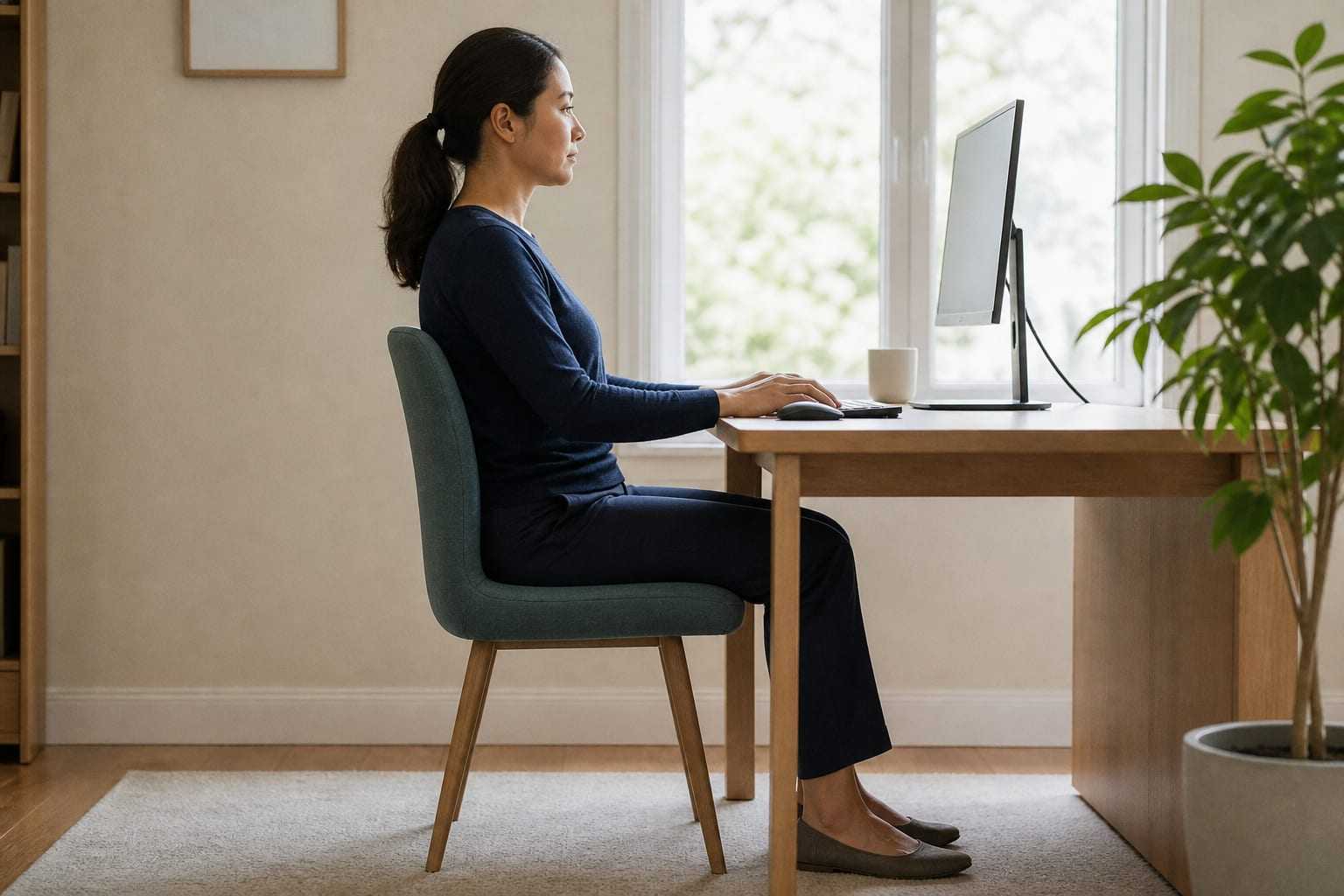
Prolonged Sitting and Low-Back Health: Duration, Variety of Positions and Support
How prolonged sitting affects the low back: sitting time and posture, variety of positions, chair and desk support, standing work and active breaks.
What Is an Active Break? Changing Position at a Desk
An active break is a short interval that changes position and movement. We explain how it differs from a passive break, how often to take one, and what to do in 1–3 minutes.
Office Ergonomics: Worker, Work and Workstation
Office ergonomics is not a search for one correct posture. We explain, step by step, how to fit the worker, the work and the workstation together.